Nourishing Our Campus
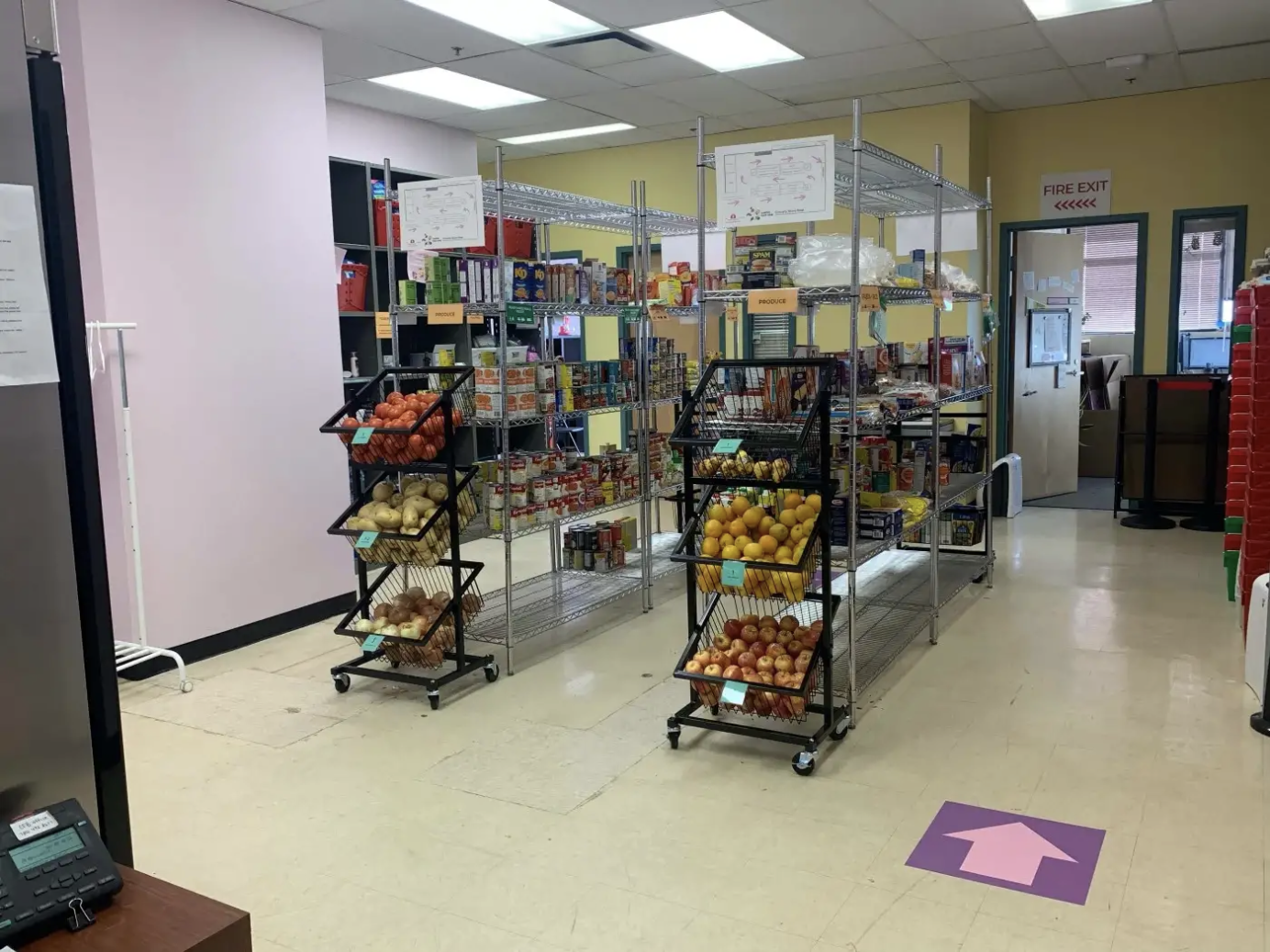
Featured Photo: University of Alberta
On this spotlight feature, we interview Yetayale Tekle, Executive Director of the Campus Food Bank, to learn more about their organization and initiatives.
Tell us a little bit about yourself and your role with the Campus Food Bank.
“I started with CFB this past April. I've been involved with the human service sector and food support throughout my career. Working with the city farms, as well as direct services through a variety of nonprofits. Here at CFB, a huge part of my role is guiding our staff and volunteers and making sure we're following the vision and mission of our board and team members. I really want to emphasize how core our staff and volunteer base are to our operations, and I'm grateful to be inheriting such a wonderful team to be able to work with and make this impact.”
Can you share the story behind how the Campus Food Bank started and what inspired its creation?
“In 1991, the Grad Students' Association started a food bank to support the rising cost of tuition, and very quickly after, the Students’ Union started to support it as well. By 1994, Campus Food Bank Society became a registered charity and started operating independently, but still with many direct ties with our broader campus community. So the grad students and Students’ Union are both still actively on our board and support some of our funding streams. Being independent does just afford us with some more flexibility in how we can engage with the community both on and off campus.”
What is the core mission of the Campus Food Bank, and who do you primarily serve or support?
“At the core of it is reducing food insecurity and increasing access to nutritious food. We are community members who serve our students, staff, alumni, and their families for up to five years. In addressing food insecurity and access, we really approach it from two perspectives. One is our agency, our advocacy and education, working towards more systemic and systematic changes, but also addressing the immediate and emergent needs of community members.”
For someone who hasn’t heard of your programs (Food Grocery Bank, Weekly Free Breakfast, Grocery Bus, Snack Stations, Community Pantry, WECAN food baskets) before, can you provide a brief overview and explain why it is so important for individuals?
“WECAN is a partnership. They're a nonprofit charity that provides low-cost food. The grocery is just all produce from TGP, so community members can purchase food at the beginning of the month, the money is pulled so that it can go much further, and then they can pick up their baskets here. Snack stations are spread throughout campus, and these are done in partnerships with different faculties, student groups, and organizations across campus to help with immediate, quick need moments. It is also a communication route and an awareness-raising route. The Grocery Bus is still an evolving program, so it's currently supported by No Frills. So we take community members from campus and residents to be able to access affordable options.”
“For our grocery program, I think that is kind of the core impact where we do the bulk of our volunteer work and the bulk of our work as an organization. So we shifted from a hamper model to a grocery model coming out of the pandemic. What this has meant is that with the same number of volunteers, we're able to serve significantly more people. So we know that demand has been increasing rapidly, and even from our end, just increasing accessibility, our additional slots were immediately filled. So we've increased our usage by over 600% in the last couple of years. I'm proud to say, even with that increased usage, we've been able to maintain the same amount of food per person and per household, so that's a relatively consistent amount per person, even though the number of people has grown so significantly. Our primary reason for shifting was the community aspect. It gives our community members more agency over what's actually going into their diet. So community members come in, grab a shopping basket, and select things relevant to their diets and their families. The Community Pantry is done in partnership with different groups across campus. So CFB coordinates the upkeep and processes for the pantry. The space is adopted by different groups each week, and then they're stocked based on recommendations from us.”
How many individuals are you able to support in a typical year?
“In terms of visits, it's about 12,000 visits in a year. For context, we did about 200,000 meals worth of food in the last year, and that's primarily across the grocery model program, and as I said, with that increase in usage, we've been able to maintain that same average amount per household. When it comes to the number of visits, a lot of that is limited by our capacity, not by the actual demand on campus.”
What types of volunteer roles are available, and what kind of tasks might someone expect to do?
“We have one-time two-hour shifts at events and recurring shifts for our committees that are multi-year commitments. The bulk of our volunteers participate in supporting the grocery model, which is divided into open and prep shifts. Those shifts are done on a semesterly basis because we know students and the bulk of our volunteers’ schedules are changing between semesters. So it's a two-hour commitment once a week over the course of a semester, and even within those individual shift types, there's a variety of duties and roles that can be engaged with, from packing to doing the community member checkouts.”
What qualities or skills do you look for in a volunteer?
“I think a lot of it comes down to our mission and values, and having that alignment. The core bit that we would look for all of our community members to have is understanding the core values around the dignity and agency that we want to provide our community members. For new volunteers, I would check out our client solidarity statement on our website.”
If someone is thinking about volunteering but is unsure, what would you say to encourage them to take that first step?
“I would say, engage. Just engage. That doesn't mean you're going to make a big commitment. Engagement can start with reading, following on social media, and seeing which parts spark questions, and don’t be hesitant to ask those questions and to dive in deeper and look at the array of roles.”
Any upcoming events or promotions you’d like us to highlight?
“If you're looking to volunteer, you can follow our newsletter, and that will provide updates for the next opportunities, and we'll probably start a recruitment for our February events early in the new year. You can sign up for the newsletter on our website. There are always new areas, and because a lot of our cycles are semester-based, there's always another chance to sign up, and even if there's no big volunteer drives, there are still opportunities to engage. Our outreach manager, Sophie, is always available to answer volunteer questions.”
Thanks for reading our NFP Feature! We’re here to shine a light on Edmonton’s not-for-profit sector and help students discover new ways to get involved. Have questions, ideas, or an organization you think we should feature?
Share them with us at anpa@ualberta.ca